
Flat roofs, cocklofts and Victorian attics
Attic & Cockloft Insulation in Brooklyn, NY
The top floor is where most Brooklyn homes lose heat in January and gain it in July. We fix the roof cavity first.
- Free on-site estimates anywhere in Brooklyn
- Written quote naming foam type, thickness and R-value for each area
- Leaks, damp masonry and old wiring flagged before anything is covered
The Space Over Your Top Floor
Attic and cockloft insulation is the work that most often changes how a Brooklyn home feels. In a rowhouse or brownstone there is usually no walk-in attic at all, just a cockloft: a shallow space, sometimes only a foot or two high, between the top floor ceiling and a flat roof. In Flatbush, Ditmas Park, Midwood and Dyker Heights, many detached and semi-detached houses have a pitched roof with a real attic or a half-story with kneewalls. Each needs a different plan, and we start every attic and cockloft insulation job by getting up there and looking.
Why the top floor runs hot and cold
Wikipedia's climate data for Brooklyn's Avenue V station shows a July average high of 84.8F and a January average low of 27.5F. A dark flat roof in the summer sun gets far hotter than the air, and that heat comes straight down through a thin cockloft into the bedrooms below. In winter, warm air rises through gaps around light fixtures, ceiling cracks, chimney chases and plumbing stacks and escapes through the roof. That is why so many Brooklyn top floors need a window unit all summer and still feel drafty in winter.
What the code asks for
The 2025 NYC Energy Conservation Code places the city in Climate Zone 4A and lists R-49 for ceilings in its prescriptive table. Code applies to new work and to the parts of a renovation that the permit covers, but it is also a sensible target for any roof cavity. In an open attic, reaching R-49 with blown cellulose or fiberglass takes well over a foot of depth, depending on the product's rating. In a shallow cockloft, that depth will not fit, which is where closed-cell foam on the underside of the roof deck comes in.
Cocklofts under flat roofs
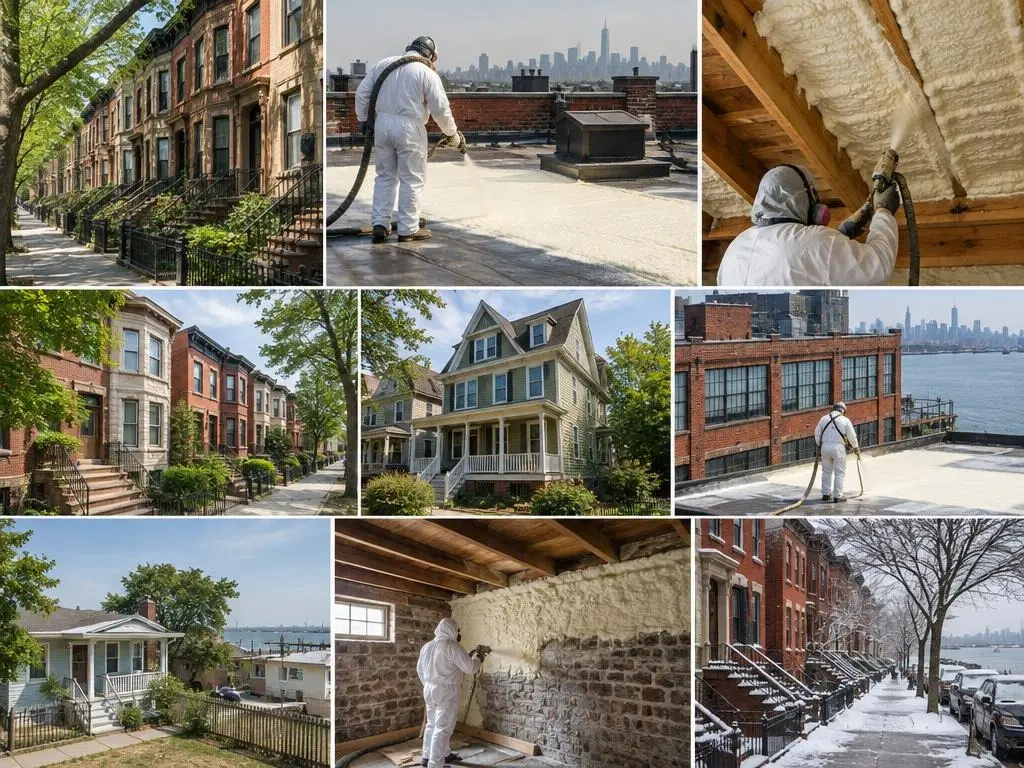
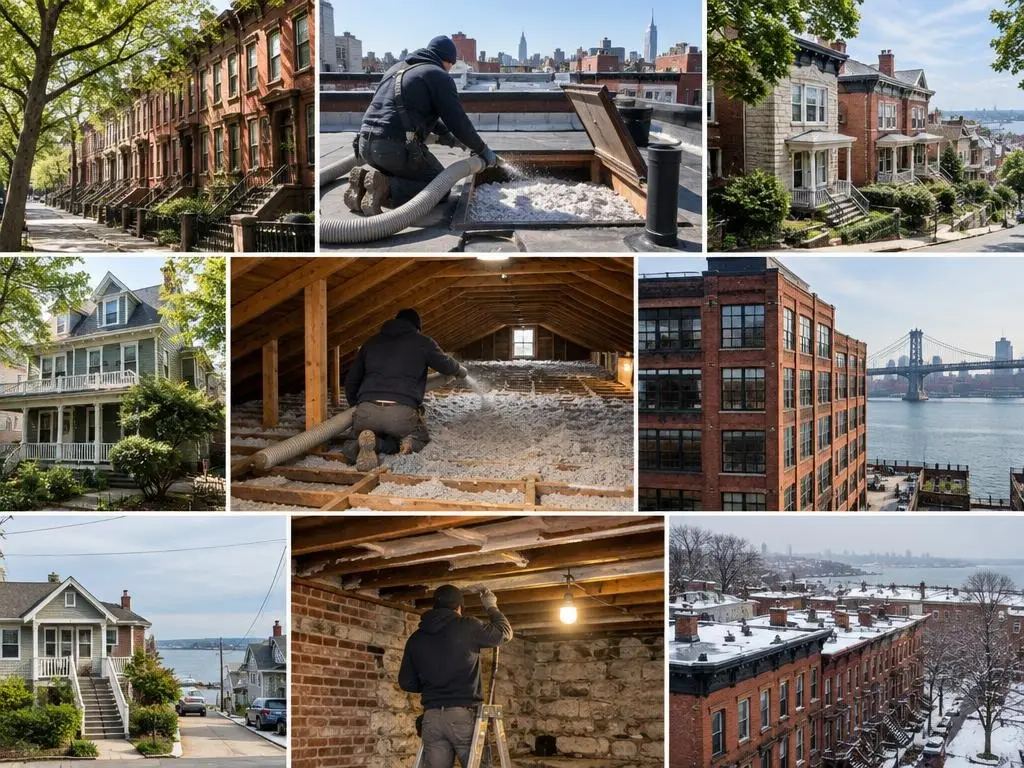
There are two common approaches. One is to seal the ceiling below from inside the cockloft and fill the space with blown insulation, keeping the cockloft vented. The other is to spray closed-cell foam on the underside of the roof deck and close the vents, making the cockloft part of the conditioned space. The second needs a dry, sound roof and works best when the roof is in good shape or newly replaced. Access matters too: some cocklofts are reached through a roof hatch, some through a ceiling hatch, and some only by opening the ceiling. We explain which approach fits your roof and why.
Pitched attics and half-stories
In frame houses with a full attic, the classic plan still works best: seal every hole in the attic floor with foam and caulk, then blow cellulose or fiberglass to depth. In half-story houses, the kneewalls and the short attic floors behind them leak badly, and foam is the practical fix there. Where the ceiling follows the roof line, closed-cell against the roof deck can insulate without vent channels.
Things we check first
Roof leaks, damp or darkened sheathing, bath fans that vent into the attic instead of outside, old knob-and-tube wiring and loose vermiculite all need attention before new insulation goes in. If we see any of them, we tell you before we price the job.
Tell us what kind of roof you have and how the top floor feels in each season. We will look and send a written price. Get a free estimate
What Attic and Cockloft Work Covers
The pieces of a typical roof-cavity job in Brooklyn.
Air sealing
Closing gaps around light boxes, chimney chases, plumbing stacks, wiring holes and hatches before insulating.
Closed-cell under flat roofs
Foam sprayed on the underside of the roof deck where a cockloft is too shallow for loose fill.
Blown-in over the ceiling
Cellulose or fiberglass blown to depth in open attics and deeper cocklofts after sealing.
Kneewalls and half-story attics
Sealing and insulating the short walls and floors around upstairs rooms in frame houses.
Hatch and access sealing
Weatherstripping and insulating the roof or ceiling hatch, a common leak in rowhouses.

Published Attic Insulation Costs
| Job | Range and source |
|---|---|
| Attic insulation, average job | $1,000 to $2,700, about $1,800 average (HomeGuide) |
| Air sealing | $350 to $3,000 (HomeGuide) |
| Blown-in, attic | $0.90 to $2.40 per sq ft (HomeGuide attic guide) |
| Spray foam on the attic floor | $1,100 to $6,800 (HomeGuide) |
| Spray foam on the roof deck | $1,500 to $9,000 (HomeGuide) |
| Spray foam, attic (existing home) | $2,500 to $12,000 (Fixr) |
| Old insulation removal | $1 to $2 per sq ft (HomeGuide) |
Ranges from HomeGuide's January 2026 attic guide and Fixr's 2025 spray foam guide. Cockloft access, roof condition, depth and removal change the total. After we see your roof cavity, our written estimate sets the price.
How an Attic or Cockloft Job Runs
1. Inspection
We get into the attic or cockloft, measure, check the roof deck and note existing insulation.
2. Plan and quote
We recommend vented or unvented, foam or blown-in, and price each part in writing.
3. Seal
Air leaks into the roof cavity get closed first.
4. Insulate
Foam or loose fill goes in to the depth on the quote.
5. Check and clean up
We confirm depth or thickness, clean up and show you the work.
Why Choose Us for Attic & Cockloft Insulation
Roof first
We look at the roof deck before recommending foam on it, and say so if it needs repair.
Depth on paper
The quote lists depth or thickness and target R-value for each area.
Attic & Cockloft Insulation Questions
What is a cockloft?
It is the shallow space between the top floor ceiling and a flat roof, common in Brooklyn rowhouses and brownstones. It is usually too low to walk in, and it is where much of the top floor's heat gain and loss happens.
How much attic insulation do I need in Brooklyn?
The NYC Energy Conservation Code lists R-49 for ceilings in Climate Zone 4A. Under a flat roof with little room, closed-cell foam can deliver a high R-value in fewer inches. We size the job to your space.
Can you insulate a cockloft without opening the ceiling?
Often yes, through a roof hatch or an existing ceiling hatch. Some cocklofts have no access at all, and then we discuss a small access opening or working from the roof side during a roof replacement.
Will attic insulation help my window air conditioner keep up?
Usually. A top floor under an uninsulated flat roof takes in a lot of heat on summer afternoons. Sealing and insulating the roof cavity cuts that heat, so the cooling you have has less to fight.
Attic & Cockloft Insulation Service Areas
- Spray Foam Insulation in Brooklyn, NY
- Spray Foam Insulation in Park Slope, NY
- Spray Foam Insulation in Brooklyn Heights, NY
- Spray Foam Insulation in Williamsburg, NY
- Spray Foam Insulation in Greenpoint, NY
- Spray Foam Insulation in Bushwick, NY
- Spray Foam Insulation in Bedford–Stuyvesant, NY
- Spray Foam Insulation in Crown Heights, NY
- Spray Foam Insulation in Flatbush, NY
- Spray Foam Insulation in Ditmas Park, NY
- Spray Foam Insulation in Midwood, NY
- Spray Foam Insulation in Sunset Park, NY
- Spray Foam Insulation in Bay Ridge, NY
- Spray Foam Insulation in Dyker Heights, NY
- Spray Foam Insulation in Bensonhurst, NY
- Spray Foam Insulation in Sheepshead Bay, NY
- Spray Foam Insulation in Gerritsen Beach, NY
- Spray Foam Insulation in Canarsie, NY
- Spray Foam Insulation in Red Hook, NY
Get an Attic & Cockloft Insulation Estimate
Tell us about your roof and top floor. We will inspect the cavity and send a written price.